
Clearly, the title of this article isn’t going to manage well when stacked up with any game that dips its feet into the realms of Esports. There, patch notes aren’t just a means of updating players on in-game changes, but are a way to communicate to professionals and content creators who needs said communication to support their livelihood.
With that caveat out of the way, I’d like to direct your attention to the world of early 2000’s gaming. During this era, nobody playing a game truly “got gud” at it in the same way they do today. A wiki filled with drop rates, NPC locations, dialogue, and obscure item and skill requirements for MMOs and shooters just didn’t exist, so, instead, players “got gud” at niche aspects of a game.
WoW players could be divided into multiple categories, with some having a strong knowledge of one or two classes, while others sported mediocre gasps of class systems, but acted as social tape that could reliably meet the needs of a guild through drafting strong raid teams or connecting two players of different professions together so they could create items of necessity for other people of lesser means.
This concept of limited knowledge stretched into area knowledge, race knowledge, lore, quest systems, PvP, etcetera, etcetera: an average player couldn’t find any one person who could give you all the info they needed in the same way a wiki could, and so they instead opted to use what knowledge they had to achieve their means while seeking out those who had access to other areas of expertise.
This accomplished in creating, primarily, two long-forgotten aspects of the game in the early days of WoW: It made experimentation and exploration its own reward, and it made socializing worthwhile. In the current state of retail (that is, the most modern version of the game), all needs for socializing are met through automated systems; finding raid partners, trading items, etcetera.
This isn’t an attempt to attack WoW, specifically, in any significant way, either. Every MMO I’ve had the pleasure of playing around with follows the same pattern as time goes on. Both RS3 and OSRS have implemented the Grand Exchange (automated trading), and have effectively nullified any need to interact with other players aside from, perhaps, raiding with someone of moderate skill.
It’s a trend that exemplifies the need for player-bases to have accurate information and little to no downtime in between playing the game’s content and logging in. That is to say the social aspects and unknowns of gaming have become synonymous with fluff instead of representing what they actually are: key components to enjoying the game itself.
You can see this development meta in the way patch notes are posted by just about any developer with a name to themselves: What bugs were fixed, what interactions were changed, what pieces of dialogue were altered, what methods of training were added, what the associated xp rates for the method are, what new items have been added / replaced and what are their niche use-cases? Just about all of this information will be listed in the patch notes of any MMO, MOBA, shooter, or RPG today.
And, look, I’m not advocating for not telling players about bugs that have been fixed, but keeping some element of secrecy is key to maintaining a player-base that wants to find out about the game through natural means and is key to ensuring they continue to act as a community that has something to offer one another with their findings.
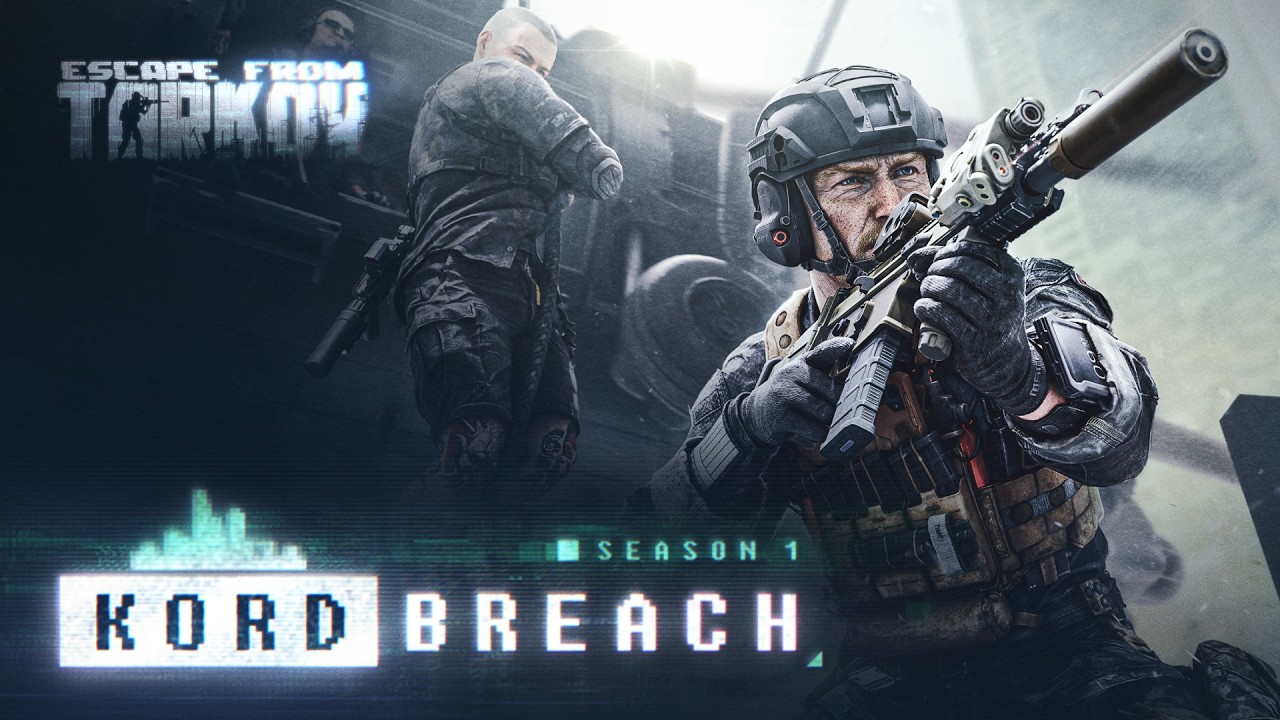
I recently wrote an article on Escape From Tarkov and their developers, BSG, are extremely intelligent in the manner they approach this issue. The game is extremely math heavy. So much so, that the community is taken to task to create entire websites detailing, for example, the amount of accurate rounds a specific ammunition might take to penetrate a specific class of armor with reliability. But BSG, instead of just listing those values themselves, offers players in-game descriptions of armor and ammunition that is very human. One ammo might be described as being “able to penerate basic armors with reliability.” while another might be said to “have low stopping power, but great results against modern armors.”

This sort of information is telling, but doesn’t give the game away: learning how exactly these rounds function is still up to the player and their willingness to learn from personal experience.
One might argue that these statistics and what exactly they represent as numbers being hunted down by the community is just extra work being thrown on their plate by the developers, and that it puts new players who don’t know about them at a disadvantage, but this argument neglects to incorporate the experience a new player might have ciphering that information out for themselves both by reading the limited information given in-game and by personal experiences.
Understanding that certain ammunition tends to behave stronger against weakly armored opponents while others are more effective against those wearing tier 4 armors is a learning curve that comes with time, and having a genuine interest in getting the feel for certain rounds as apposed to just reading about what ammunition has a rating of “6” against tier 4 armor is an experience that, although some have the option of circumnavigating, some would love to have. And its this experience that detailed patch notes, which suck all of the need for exploration and community out the games they represent, robs their player-bases of.
This is true for Tarkov, it’s true for WoW, and it’s true for just about anything in life: like reading about the intended meaning of a book instead of just reading the book for yourself.
GLHF,
-E



You must be logged in to post a comment.